Homelessness Does Not Always Look the Way We Expect
September is a season of new beginnings.
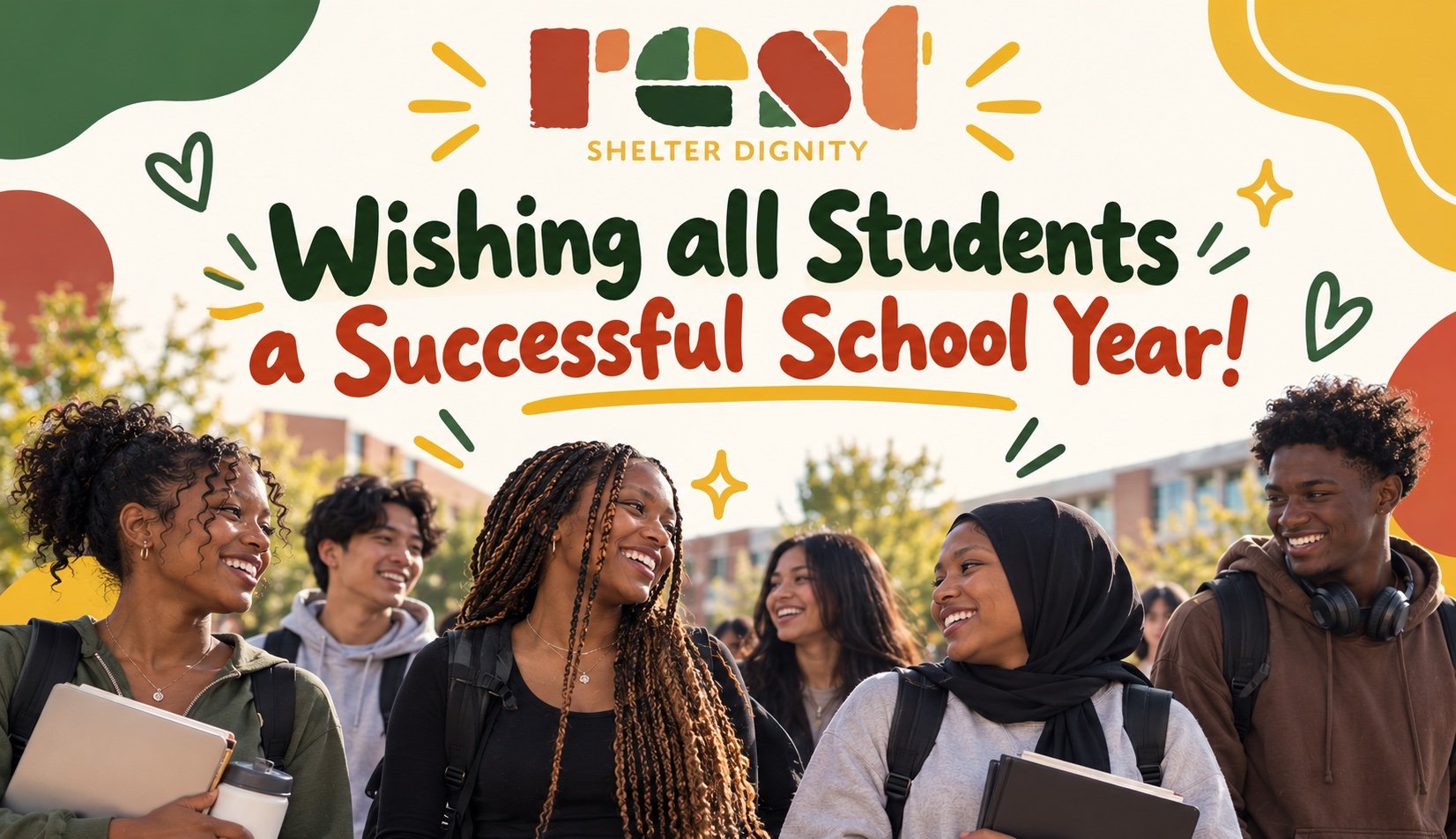
Across Peel, young people are returning to classrooms, reconnecting with friends, meeting new teachers and looking ahead to another year of learning and possibility. At REST Centres, we want to wish every student a safe, successful and hope filled school year.
But as we mark the back to school season, one finding from the recent midpoint evaluation of our BLAZE program has stayed with us:
A young person can be experiencing homelessness and still be showing up.
They may still attend school, complete assignments, spend time with friends and participate in activities, while privately navigating housing instability that few people around them know about.
Hidden in Plain Sight
BLAZE is REST’s school based initiative designed to engage and support Black youth early, before challenges escalate into crisis. The recent independent evaluation examined programming delivered through six participating schools and summer cohorts, engaging 280 predominantly Black youth.
What we learned about housing instability was striking.
At registration, 15 young people disclosed that they were living in shelters, most with their families. As relationships developed through the program, REST identified another eight youth living in emergency shelters, one young person facing homelessness and six who were precariously housed.
That means 23 young people participating in BLAZE were identified as living in shelters.
These were young people still navigating many of the same things as their peers: school, friendships, plans for the future, family relationships and the everyday pressures of growing up. At the same time, they were carrying the uncertainty of not having a stable place to call home.
Across BLAZE, 45 youth, approximately 16 percent of participants, were identified as being at risk. Some concerns were known when youth entered the program; others became visible only as relationships and trust developed.
Perhaps one of the most important findings was that BLAZE helped identify young people whose circumstances school staff had previously been unaware of. The evaluation found that trusted relationships between young people, school staff and REST created opportunities for needs to emerge that might otherwise have remained hidden.
Homelessness Does Not Always Look the Way We Expect
A young person experiencing housing instability may not identify themselves as homeless.
They may be staying in a shelter with their family. They may be temporarily staying somewhere else. They may be dealing with escalating family conflict or living with the uncertainty of not knowing whether they will be able to remain where they are.
From the outside, everything may appear normal.
The evaluation reinforced why prevention cannot begin only when a young person enters the homelessness system. It also showed why creating safe, non stigmatizing opportunities for young people to build relationships with trusted adults matters. The report noted that the hidden nature of homelessness, together with stigma around family breakdown, can mean young people who need support are easily overlooked when they have not disclosed what they are experiencing.
For us, this is one of the most important lessons from BLAZE so far: sometimes the first step in preventing homelessness is simply creating enough trust for a young person to say, “I need help.”
A Back to School Reminder for All of Us
As young people return to school this September, we are thinking about the student whose backpack is packed, but whose housing is uncertain; the student laughing with friends while their family is staying in a shelter; and the young person who appears to be doing well, but is quietly worried about what will happen when the school day ends.
We are also thinking about the teacher, coach, counsellor, community worker or trusted adult who may be the first person that young person chooses to tell.
Back to school should mean more than returning to a classroom. Every young person deserves the stability, relationships and support they need to learn, dream and build their future.
BLAZE reminds us that early intervention matters, and that schools can be an important place for young people to become connected to support before instability becomes a prolonged crisis.
With Gratitude
BLAZE and the learning emerging from this work would not have been possible without the support of the Government of Canada through Employment and Social Development Canada’s Supporting Black Communities funding. The federal investment supported REST’s RISE and FIRM for Black Youth Resilience and Growth initiative, which became known to youth and partners as BLAZE.
We are also deeply grateful to our participating schools, educators, community partners, facilitators and REST team. Most importantly, we are grateful to the young people who trusted us with their experiences; their voices are helping us better understand what prevention needs to look like.
To every student beginning another school year across Peel, we wish you a year filled with growth, opportunity, belonging and hope.